Micron did not re-rate. That single correction dismantles most of the case being made for Vistra right now, because the Vistra pitch borrows Micron’s chart while ignoring what actually produced it. A year ago Micron (MU) traded at 20.9 times trailing earnings. After a 484% advance it trades at 21.0 times. The multiple has not moved. Every cent of that move came from earnings per share, which went from $7.59 to $44.17 over the same four quarters. Vistra (VST), meanwhile, has done the exact opposite: its trailing earnings barely moved, and the stock fell 32%.
The information that settles the Vistra question is the direction of the multiple, not the size of the contracts. Vistra’s price-to-earnings ratio compressed from 33.7 times to 23.9 times over the past twelve months while trailing EPS slipped 4.7%, from $6.22 to $5.93. The market has already tried paying Vistra an AI-power multiple, held it briefly in September 2025, and withdrawn it. So a Micron-style outcome for VST cannot be a re-rating story at all. It would have to be an earnings story, and the earnings are contractually pre-sold: Vistra reported hedging roughly 100% of expected 2026 generation volumes, 94% of 2027 and 72% of 2028 as of 3 August 2026 (Vistra 8-K, 7 Aug 2026). A company that has sold three of the next four years forward cannot deliver a 482% earnings surprise.
Key facts: Vistra versus Micron
- Twelve-month price return to the 15 Sep 2026 close: Micron +484.1% ($158.82 to $927.60), Vistra −32.4% ($209.43 to $141.53). Source: Nasdaq daily closes via api.nasdaq.com, retrieved 16 Sep 2026
- Micron trailing P/E: 20.9x then, 21.0x now. Trailing EPS $7.59 to $44.17. Source: Micron 8-K and 10-Q filings via SEC XBRL, 24 Jun 2026
- Vistra trailing P/E: 33.7x then, 23.9x now. Trailing EPS $6.22 to $5.93. Source: Vistra 8-K and 10-Q filings via SEC XBRL, 10 Aug 2026
- Vistra reaffirmed 2026 Ongoing Operations Adjusted EBITDA guidance of $6.8bn to $7.6bn. Source: Vistra 8-K, 7 Aug 2026
- Vistra’s 20-year PPAs with Meta cover 2,609 MW of PJM nuclear and are worth 8%–10% of free cash flow before growth on operating volumes, plus 5%–7% on uprates. Source: Vistra 8-K, 9 Jan 2026
- The PJM 2028/2029 Base Residual Auction cleared at the administrative cap of $325.00 per MW-day; PJM’s own no-cap simulation clears at $554.72. Source: PJM 2028/2029 BRA Report, 14 Jul 2026
- Vistra cleared 10,924.4 MW in that auction, all of it at $325.00. Source: Vistra 8-K, 14 Jul 2026
What actually moved Micron, and why it cannot be copied
Micron’s fiscal third quarter, reported on 24 June 2026, is the cleanest example of an earnings explosion in recent large-cap history. Revenue of $41.46bn compared with $9.30bn in the same quarter a year earlier. GAAP gross margin went from 37.7% to 84.6%. Net income went from $1.89bn to $28.24bn, and diluted EPS from $1.68 to $24.67 (Micron fiscal Q3 2026 release).
Note the shape of that. The revenue line quadrupled, but the profit line grew fifteen-fold, because memory pricing drops through to the bottom line almost unimpeded once fabs are full. Fixed costs were already sunk. Operating expenses rose from $1.34bn to $1.74bn while operating income rose from $2.17bn to $33.32bn.
That is operating leverage on an input whose spot price is set by a shortage. It has no equivalent in merchant power, and not because power is less scarce. A megawatt-hour delivered under a 20-year PPA earns its contracted price whether the grid is short or long. The 2,609 MW Vistra sold to Meta will earn the same whether PJM is in surplus or in emergency conditions, which is precisely why the counterparty signed.
Our earlier analysis of Micron against Nvidia made the point that the market still prices Micron as a cyclical, at roughly 7.5 times run-rate earnings, because memory has collapsed three times in eight years. The same discipline cuts the other way for Vistra. Investors will not pay a durable-infrastructure multiple for cash flows they can see being competed away, and they will not pay a cyclical multiple for cash flows that cannot cycle upward.
“Micron’s record fiscal Q3 financial results and even stronger outlook for Q4 reflect the strategic value of memory in the AI era,” said Sanjay Mehrotra, Chairman, President and CEO of Micron Technology, in the quarterly release. “We believe our multi-year Strategic Customer Agreements will significantly enhance the durability and predictability of Micron’s strong financial performance.” Micron is moving toward contracted revenue. Vistra is already there.
What Vistra actually signed, in megawatts and in dollars
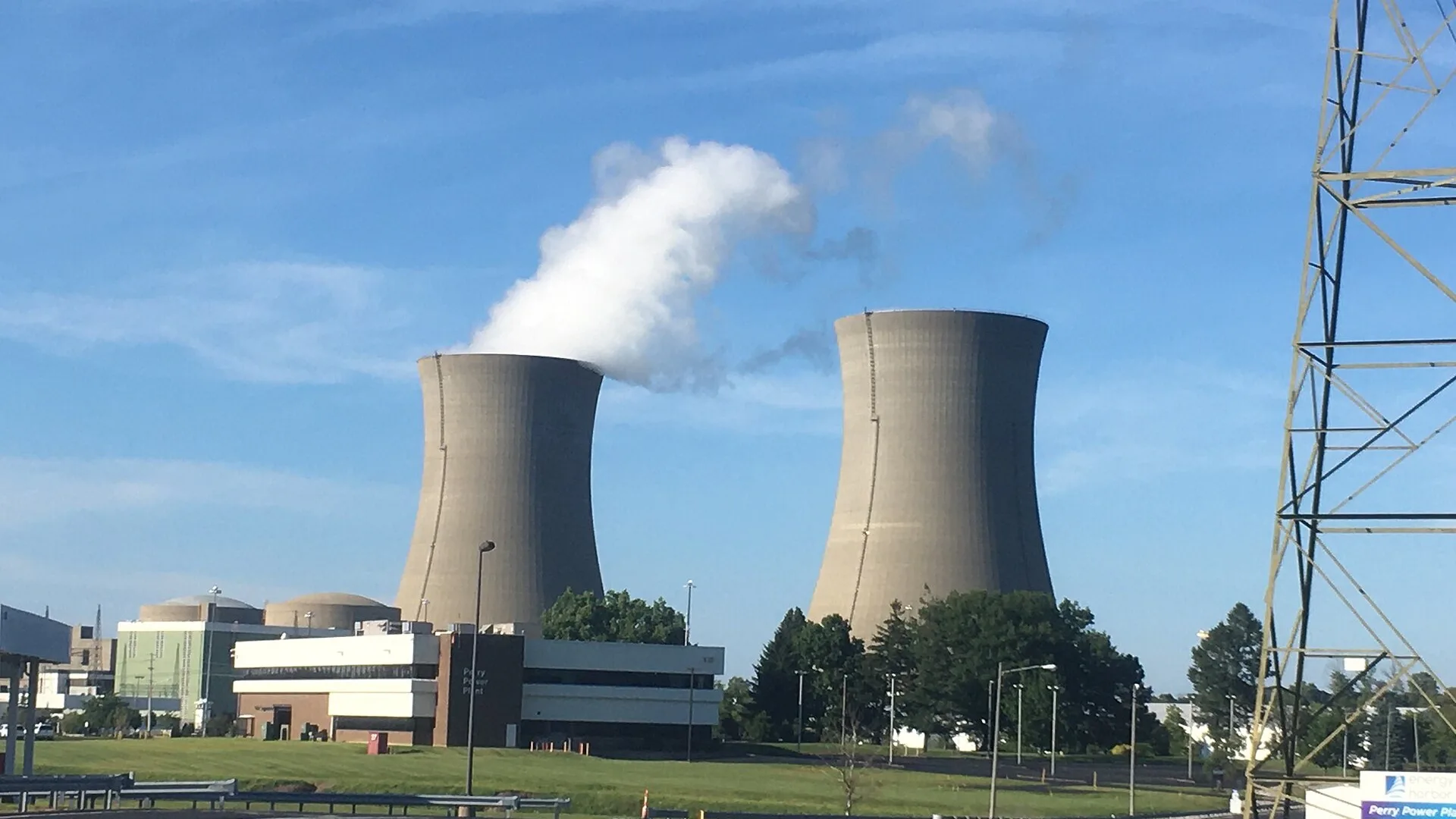
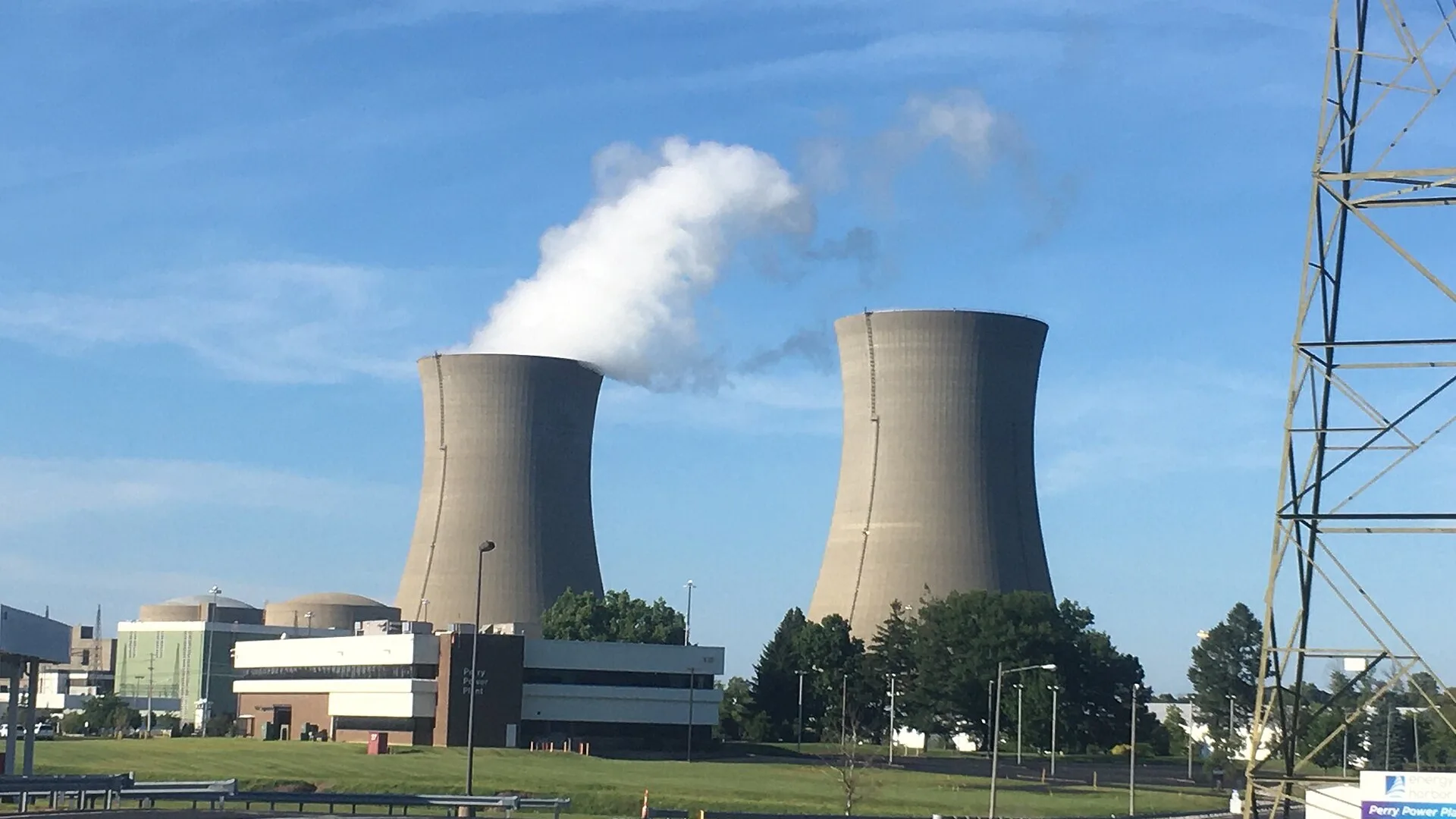
In January 2026 Vistra disclosed 20-year power purchase agreements with Meta Platforms covering 2,609 MW of carbon-free energy and capacity from its PJM nuclear fleet. The breakdown matters: 1,268 MW from the operating Perry plant and 908 MW from Davis-Besse, plus 213 MW of Perry uprate, 80 MW of Davis-Besse uprate and 140 MW of Beaver Valley uprate. Full delivery of the operating volumes is expected by year-end 2027. Full delivery of the uprate volumes is expected by year-end 2034 (Vistra 8-K, 9 Jan 2026).
Add the separate 20-year agreement with Amazon Web Services for up to 1,200 MW at Comanche Peak and the total reaches roughly 3,800 MW, as Vistra itself framed it in its full-year results (Vistra 8-K, 26 Feb 2026). FinanceFeeds covered that contracted nuclear book when the second deal landed.
Now the part the bull case tends to skip. Vistra quantified the Meta deal. At full delivery, the operating energy and capacity adds approximately 8% to 10% to Adjusted Free Cash Flow before Growth, and the uprates add a further 5% to 7%. Against the midpoint of 2026 guidance of $4.325bn, that is roughly $560m to $740m a year, arriving in stages between late 2026 and 2034.
It is a good deal. It is not a Micron. The largest AI power contract in the company’s history is worth about 15% of free cash flow, phased over eight years, versus the 346% year-on-year revenue increase Micron booked in a single quarter.
The company’s own capital allocation tells the same story. Vistra agreed in January to buy Cogentrix Energy, roughly 5,496 MW of gas generation, for a net $4.0bn, which it described as “approximately 7.25x the 2027 expected Adjusted EBITDA contribution and approximately $730/kW” (Vistra press release, 5 Jan 2026). Management is buying generation at 7.25 times EBITDA while running a buyback. “The Vistra team delivered another strong quarter, building on our momentum from the start of the year and continuing to execute at a high level,” said Jim Burke, president and CEO of Vistra, on 7 August. Executing well is the claim. Re-rating is not.
The arithmetic: what a Micron-sized move would actually require
Start from where Vistra trades. At $142.50 in pre-market dealing on 16 September, with roughly 336 million shares outstanding and net debt of about $19.2bn at 30 June, enterprise value is close to $67bn. Against the $7.2bn midpoint of 2026 EBITDA guidance, that is 9.3 times.
Repeating Micron’s 484% would put VST at about $832, an equity value near $280bn and an enterprise value near $299bn. Two levers can get there, and only two.
| Route to a Micron-sized VST move | What it requires | Reality check |
|---|---|---|
| Hold today’s 9.3x EV/EBITDA, grow earnings | $32.1bn of Adjusted EBITDA | 4.5x current guidance, and 1.8x Vistra’s entire 2025 revenue of $17.59bn |
| Hold EBITDA at $7.6bn, the midpoint of Vistra’s stated 2027 opportunity range of $7.4bn to $7.8bn, and expand the multiple | 39.3x EV/EBITDA | Vistra’s own peak, at the 22 Sep 2025 closing high of $217.92, was 15.0x |
| Split the difference | EBITDA doubles to $14.4bn and the multiple doubles to 20.8x | Vistra paid 7.25x for merchant gas capacity eight months ago |
None of the three is a forecast. They are boundary conditions, and they are what makes the comparison decidable rather than rhetorical.
Here is the synthesis that neither Vistra’s filings nor PJM’s reports state on their own. Vistra cleared 10,924.4 MW in the 2028/2029 Base Residual Auction at $325.00 per MW-day, which annualises to about $1.30bn of capacity revenue. PJM published a parallel simulation of the same auction with its administrative cap and floor removed: clearing prices of $554.72 across the RTO and $776.69 in COMED. Apply those prices to Vistra’s own cleared megawatts by zone and the same fleet earns about $2.31bn. The price cap therefore costs Vistra on the order of $1.01bn a year, equal to 14% of guided EBITDA.
Now feed that back into the model. Hand Vistra the entire uncapped capacity upside, hold the multiple at 9.3 times, and the stock is worth roughly $170. That is a 19% gain from here, in the same range as the $217.00 one-year consensus target Nasdaq publishes for VST. It is not 484%. Our own bull and bear scenarios for VST landed in comparable territory.
The regulatory ceiling nobody prices
Micron’s selling price is set by scarcity. Vistra’s is set, in part, by a tariff. That asymmetry is the structural reason the two re-rating mechanics differ, and it is visible in PJM’s own documents.
For the 2028/2029 delivery year, PJM applied a cap of $325.00 per MW-day of unforced capacity and a floor of $175.00, filed at the Federal Energy Regulatory Commission under docket ER25-1357. The same cap-and-floor construct applied to the 2026/2027 and 2027/2028 auctions. All three cleared at the cap. Worse for sellers, the cap declined: the 2027/2028 auction cleared at $333.44, the 2028/2029 auction at $325.00 (PJM 2028/2029 BRA Report, 14 Jul 2026). Tightening supply produced a lower price, which is not how a scarcity market behaves.
There is a second constraint. PJM reported that the RTO as a whole failed the Three-Pivotal Supplier test, “resulting in the application of market power mitigation to all Existing Generation Capacity Resources.” Mitigated sellers bid the lesser of their approved Market Seller Offer Cap or their submitted price. A generator in Vistra’s position is administratively prevented from bidding its scarcity value even when the grid is short, and PJM’s own figures confirm the grid was short: the auction cleared 6,831.3 MW below the reliability requirement.
The mitigation is not free to consumers either. PJM estimated that removing the cap and floor would have raised the product of cleared megawatts and clearing prices by $13.3bn for that single delivery year. States across the footprint, from Maryland to Illinois to New Jersey, have spent the past two auction cycles fighting over who absorbs that cost. Any durable political settlement that protects retail bills also caps the merchant upside, which is the same reason Constellation’s nuclear fleet trades on contract duration rather than spot power. Micron faces export controls and tariffs; it does not face a regulator that sets the price of DRAM.
What would actually have to happen
Three things, in sequence, and the first two are testable within eighteen months.
First, FERC would have to let the cap-and-floor construct lapse rather than extend it. The 2029/2030 auction parameters are already posted, and if that auction clears meaningfully above $325.00 the market will learn that the administrative ceiling was temporary. That is worth roughly $1bn a year to Vistra on 2028/2029 cleared volumes, and it is the single largest lever available. Watch the 2029/2030 Base Residual Auction result.
Second, the hedge book has to roll off into a higher curve. Vistra is 94% hedged for 2027 and 72% for 2028, so the earliest year in which an open position can produce a genuine earnings surprise is 2028, and the surprise is capped by the 28% that is open. Vistra has already put a 2027 Adjusted EBITDA midpoint opportunity range of $7.4bn to $7.8bn on the record, and that range excludes Cogentrix and part of the Meta contribution.
Third, the market would have to accept that 20-year investment-grade counterparty contracts deserve an infrastructure multiple rather than a utility one. That is the real Vistra bull case, and it is a slow argument rather than a violent one. Reclaiming the 15.0 times the market briefly paid in September 2025, applied to $8.2bn of post-cap-removal EBITDA, puts the stock near $310. That is a 117% gain and an excellent two-year outcome. It is also about a quarter of Micron’s move.
| Conditions that support a VST re-rating | Conditions that cap it |
|---|---|
| PJM cap-and-floor lapses after 2029/2030, worth about $1.01bn a year on 2028/2029 cleared volumes | FERC extends the construct, or states win a cost-allocation settlement that keeps clearing prices administered |
| Cogentrix adds 5,496 MW bought at 7.25x, accretive to per-share free cash flow from 2027 | Roughly $19.2bn of net debt and a fleet bought at private-market multiples anchors the public multiple near them |
| Meta and AWS volumes convert 20-year contracted cash flow into an infrastructure re-rating argument | Those same contracts fix the price for 20 years, removing the upside convexity that drove Micron |
The honest conclusion is conditional, and the range is wide. Vistra can plausibly deliver somewhere between 20% and 120% over two to three years depending on how many of those conditions land: the low end if the cap survives and only guidance compounds, the high end if the cap goes and the multiple returns to its 2025 peak. It cannot deliver 484% without an EBITDA figure larger than its current revenue, or a multiple no merchant power producer has ever sustained. Those are different animals, and the chart above is the evidence.
Frequently asked questions
Why did Vistra stock fall 32% while the AI power story kept growing?
Because the decline was almost entirely multiple compression, not deterioration. Trailing EPS fell 4.7%, from $6.22 to $5.93, while the price-to-earnings ratio went from 33.7 times to 23.9 times. Investors paid a premium for AI-linked power in September 2025, then discovered that hedging, PJM price caps and 20-year fixed-price contracts limit how much of a demand shock reaches earnings.
Did Micron’s stock re-rate or just follow earnings?
It followed earnings almost exactly. Micron’s trailing P/E was 20.9 times a year ago and 21.0 times after a 484% advance, because trailing EPS rose from $7.59 to $44.17 over the same period. On forward numbers the multiple actually contracted, since fiscal Q4 guidance implies about $31.00 of quarterly EPS. Calling the move a re-rating misdescribes the mechanism.
How much are Vistra’s AI data centre contracts actually worth?
The Meta agreements cover 2,609 MW of PJM nuclear over 20 years. Vistra guided to 8%–10% incremental Adjusted Free Cash Flow before Growth accretion from the operating volumes and 5%–7% from the uprates, which is roughly $560m to $740m a year at guidance midpoint, phased between late 2026 and 2034. The separate AWS agreement at Comanche Peak covers up to 1,200 MW.
What EBITDA would Vistra need for a Micron-sized move?
Holding today’s 9.3 times EV/EBITDA, roughly $32.1bn, which is 4.5 times 2026 guidance and nearly double Vistra’s 2025 revenue of $17.59bn. Holding EBITDA at the 2027 midpoint opportunity instead, the required multiple is 39.3 times. Vistra’s highest multiple on record, at its September 2025 peak, was 15.0 times.
Does the PJM capacity auction cap matter to VST earnings?
Materially. Vistra cleared 10,924.4 MW at the $325.00 cap for 2028/2029, worth about $1.30bn annualised. PJM’s own no-cap simulation of the same auction clears at $554.72 across the RTO and $776.69 in COMED, which would lift the same volumes to roughly $2.31bn. The gap is about $1.01bn a year, or 14% of guided EBITDA.
Is Vistra cheaper than it was a year ago?
On trailing earnings, yes: 23.9 times against 33.7 times. On enterprise value, VST trades near 9.3 times 2026 guided EBITDA, against the 15.0 times implied at the September 2025 high and the 7.25 times Vistra itself paid for the Cogentrix gas portfolio in January 2026. Whether that is cheap depends on whether the PJM cap is temporary.